


























( liner notes )
Saint-Saëns banned Carnival of the Animals, then wrote it into his will
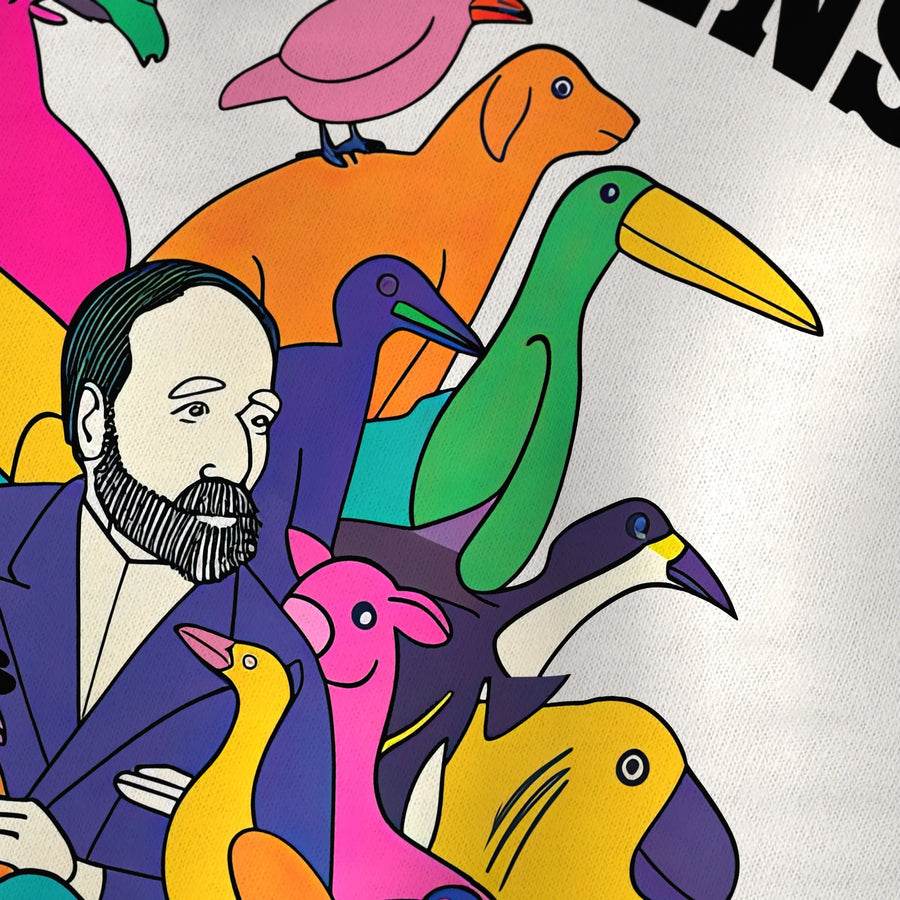
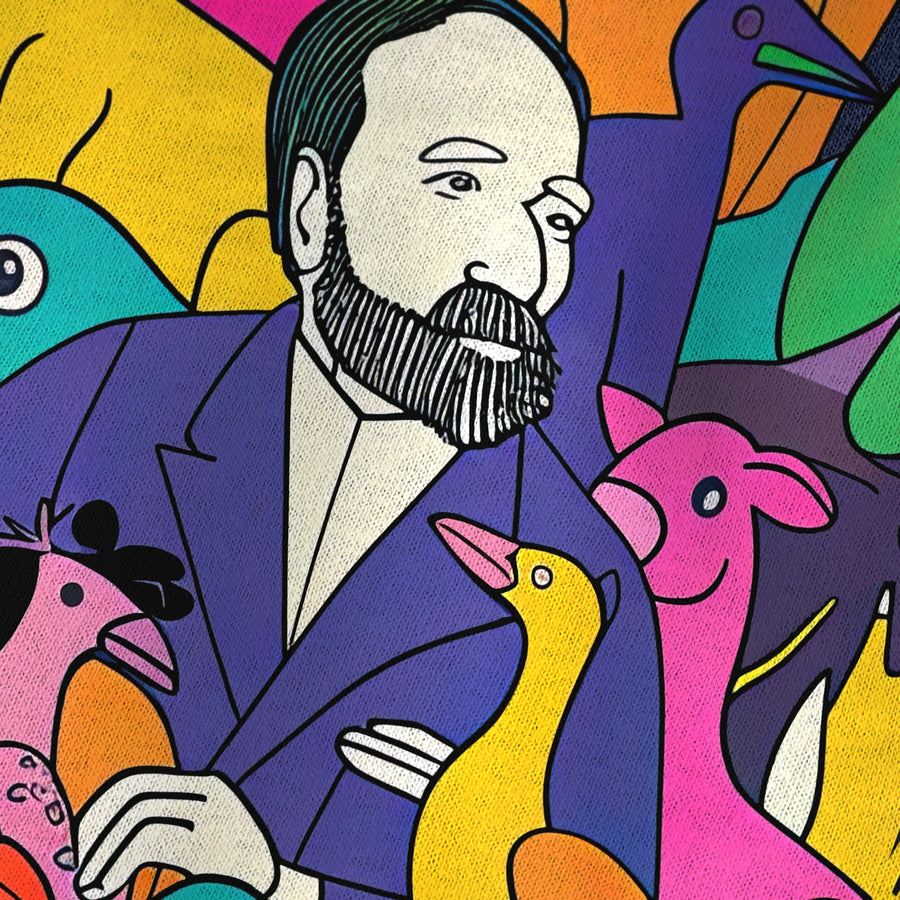
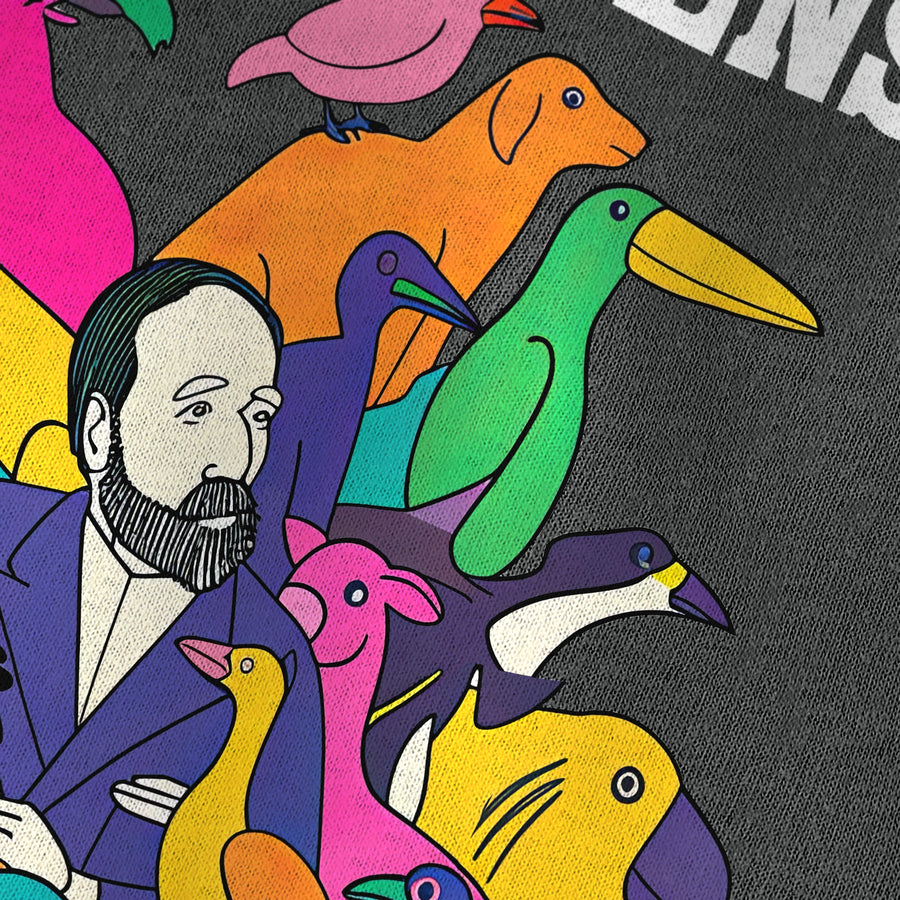
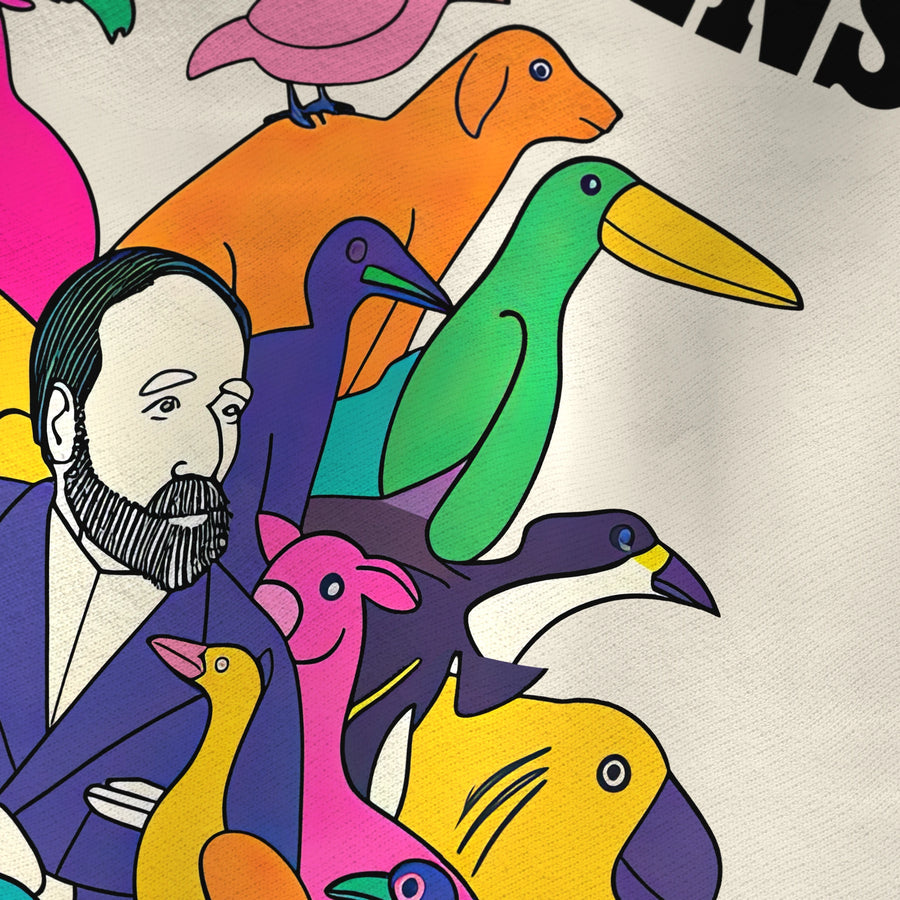
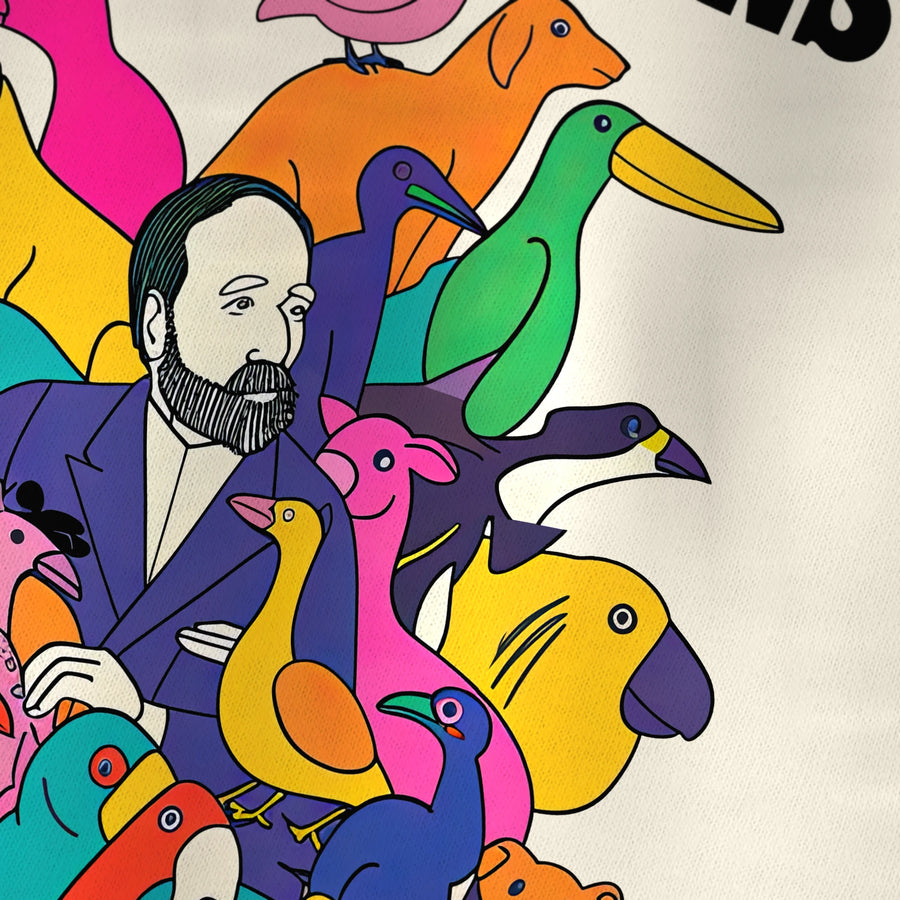
 ( the shirt )Saint-Saëns: Carnival of the Animals
He wrote it in a few days as a joke, refused to let it be printed or played, and then left one instruction: publish this one.
Camille Saint-Saëns left a will that was strict about his papers. Nothing unpublished was to be printed after his death. Nothing, that is, except one piece: a carnival joke he had spent the last quarter-century of his life keeping out of public view.

A tour that went wrong
At the start of 1886 Saint-Saëns was touring Germany with his Fourth Piano Concerto. On this trip he was accused, unjustly, of making anti-German remarks, and suspected, for no good reason, of joining a Paris boycott of Wagner's Lohengrin. He broke off the tour in a temper. After concerts in Vienna and Prague he withdrew to a small village in Austria. Which village is not known; some references name a town in Bohemia, but the editors of the modern Henle edition say plainly that nobody knows where.
There, in a few days, he wrote a Grande Fantaisie Zoologique for two pianos, string quintet with double bass, flute, clarinet, glass harmonica and xylophone. The ideas may have been older. His former pupils at the École Niedermeyer, Gabriel Fauré among them, later recalled a young piano teacher who broke up dry lessons with musical parodies and caricatures.

The animals
The parodies are the point. In "Tortues", the tortoises dance Offenbach's breakneck cancan from Orpheus in the Underworld, very slowly. In "L'Éléphant", the double bass lumbers through Berlioz's dainty "Ballet des sylphes" and the scherzo from Mendelssohn's A Midsummer Night's Dream. "Pianistes" are a species of their own, practicing scales. And in "Fossiles" Saint-Saëns digs up French folk songs, a bit of Rossini's Barber of Seville and his own Danse macabre, which puts the composer among the fossils.
Mardi Gras, and Liszt
The first performance was on Shrove Tuesday, 9 March 1886, at the cellist Charles Lebouc's traditional Mardi Gras concert in Paris. The flautist Paul Taffanel conducted; Saint-Saëns and Louis Diémer played the two pianos. (Some references give 3 March. 9 March was the Mardi Gras that year, and it is the date the Henle edition gives.)

A second performance followed at the chamber society La Trompette. Franz Liszt was in Paris that spring and missed both. So on 2 April, at Liszt's instigation, it was played privately in the salon of the singer Pauline Viardot. The sources say the performance was arranged for him; they do not say outright that he sat in the room. Liszt died on 31 July 1886, four months later.

The lock-up
The success was not what Saint-Saëns wanted. He regarded himself first as a serious composer of chamber music and symphonies. From about the mid-1890s he forbade further performances and would not let the work be published.
One animal got out. "Le Cygne", the cello melody over rippling pianos, was published on its own in 1887, for cello and piano, and was arranged for a great many combinations after that. In 1905 he even allowed the dancer Anna Pavlova to use it for Mikhail Fokine's The Dying Swan. The menagerie around it stayed in the drawer.

The will
He knew what he had, though. His will, as printed by his biographer Jean Bonnerot in 1922, says:
« J'interdis formellement la publication de toute œuvre inédite, à l'exception du Carnaval des animaux qui pourra être édité par mes éditeurs ordinaires MM. Durand et Cie. » "I expressly forbid the publication of any unpublished work, with the exception of the Carnival of the Animals, which may be published by my usual publishers, Messrs Durand et Cie." (Jean Bonnerot, C. Saint-Saëns (1835–1921): sa vie et son œuvre, new ed., Paris, 1922, p. 221, as cited in the Henle preface; our translation)
Every other unpublished manuscript was sealed off in one sentence, and a single joke was let through.

What happened after
Saint-Saëns died in Algiers on 16 December 1921. On 25 February 1922 Gabriel Pierné conducted the first public performance of the complete work at the Concerts Colonne in Paris. Durand published it in March 1922, three months after his death (one or two references say April), and it was an immediate success.

Sources
- Ernst-Günter Heinemann, preface to Saint-Saëns, Le Carnaval des animaux, G. Henle Verlag HN 939 (Munich, 2020): link
- Jean Bonnerot, C. Saint-Saëns (1835–1921): sa vie et son œuvre, new ed. (Paris, 1922), p. 221 (the will), as cited by Henle
- Autograph score, Bibliothèque nationale de France, btv1b55007215h
- Le Carnaval des animaux, first edition with "Notice" (Durand, 1922), BnF bpt6k3142767
- Le Cygne (Durand, 1887), BnF bpt6k319529z
- Music in the video: "Le Cygne", Hans Kindler (cello), Rosario Bourdon (piano), Victor, 1916, Library of Congress National Jukebox: link
- Fossil in the video: "Fossilised skeleton of a saurian (Ichthyosaurus)", Wellcome Collection, CC BY 4.0, via Wikimedia Commons: link
The design