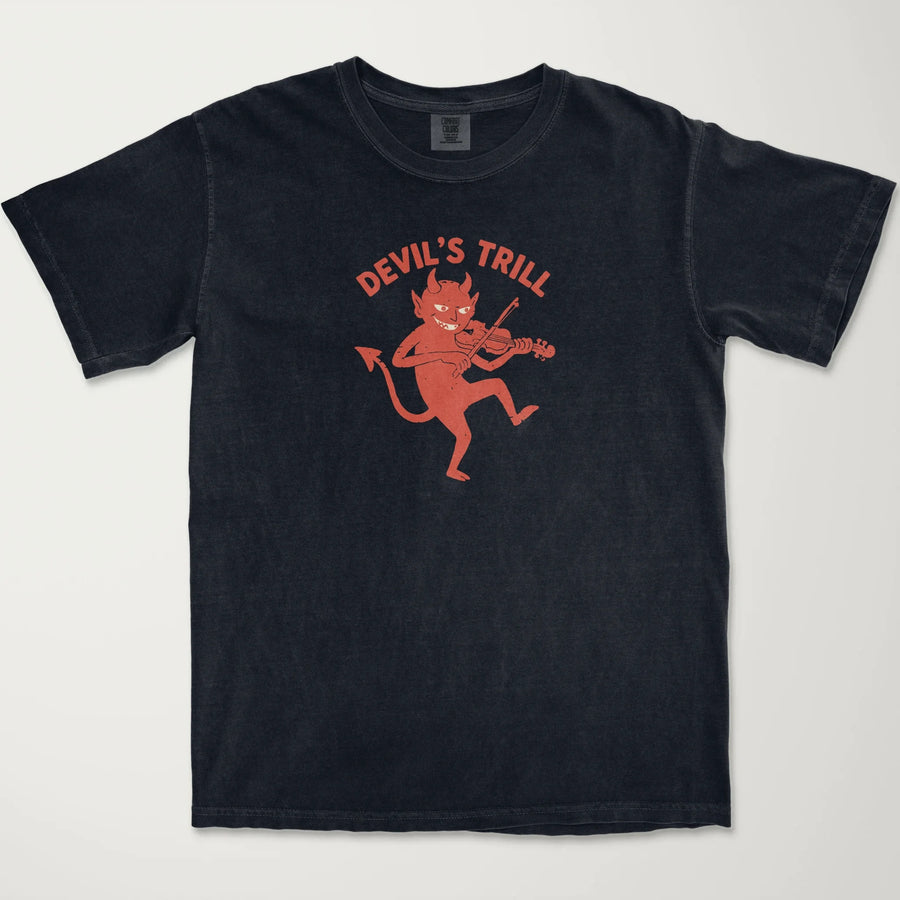






























Giuseppe Tartini said his best piece was a bad copy of a sonata the devil played him in a dream.
In the mid-1760s, the French astronomer Jérôme Lalande travelled through Italy, and in Padua he met the violinist Giuseppe Tartini, by then in his seventies. Tartini told him a story about a night more than fifty years earlier. Lalande wrote it down, and printed it in 1769, in the eighth volume of his travel book, the Voyage d'un François en Italie.
It is the only account we have, and it came from Tartini himself.

The dream
Tartini was born in 1692, in Pirano on the Istrian coast, so in 1713 he was twenty-one. Here is the heart of the story as Lalande printed it, in our translation (abridged):
One night in 1713, he dreamed that he had made a pact, and that the devil was at his service. Everything went as he wished; his wishes were always anticipated, and his desires always surpassed. He had the idea of giving the devil his violin, to see whether he could play him some beautiful airs. He heard a sonata so singular and so beautiful that he had never heard, or even imagined, anything to compare with it. He lost his breath, and the violence of the feeling woke him.

Waking up
He took his violin at once, hoping to catch at least part of what he had heard. In Lalande's words, it was in vain. The piece he wrote that night was, he told Lalande, the best he ever made, and he still called it the devil's sonata. But it fell so far short of the dream that he would have smashed his violin and given up music for good, if he could have done without the living it gave him.
That is the strangest thing about the story. Tartini didn't claim the devil gave him a masterpiece. He claimed the devil gave him a better one, and that what we have is the best he could remember.

The Devil's Trill
The sonata we know today is the Violin Sonata in G minor, nicknamed the Devil's Trill for the long, fiendish trills in its last movement. It wasn't published in his lifetime. It first appeared in print in 1798 or 1799, almost thirty years after his death in Padua in 1770, in Jean-Baptiste Cartier's collection L'Art du violon, under the heading "Trillo del diavolo al piè del letto": the devil's trill at the foot of the bed.


Sources
- Jérôme Lalande, Voyage d'un François en Italie, fait dans les années 1765 & 1766, vol. 8 (1769), chapter XIX (Padua), pp. 292–293. Archive.org: link (the translation here is our own).
- Jean-Baptiste Cartier, L'Art du violon (Paris, 1798/99), the first printing of the sonata, via IMSLP and Wikimedia Commons.
- Wikipedia, Violin Sonata in G minor (Tartini), for the publication history and the dating of the sonata from its style. Used as a guide to the scholarship, which is cited there.
- Music in the film: Franz von Vecsey (aged 17), "Il trillo del diavolo", Fonotipia 74091, recorded 17 February 1911. Public domain in the US. Archive.org: link
- Images: Wikimedia Commons, all public domain. No credit line required.
The design